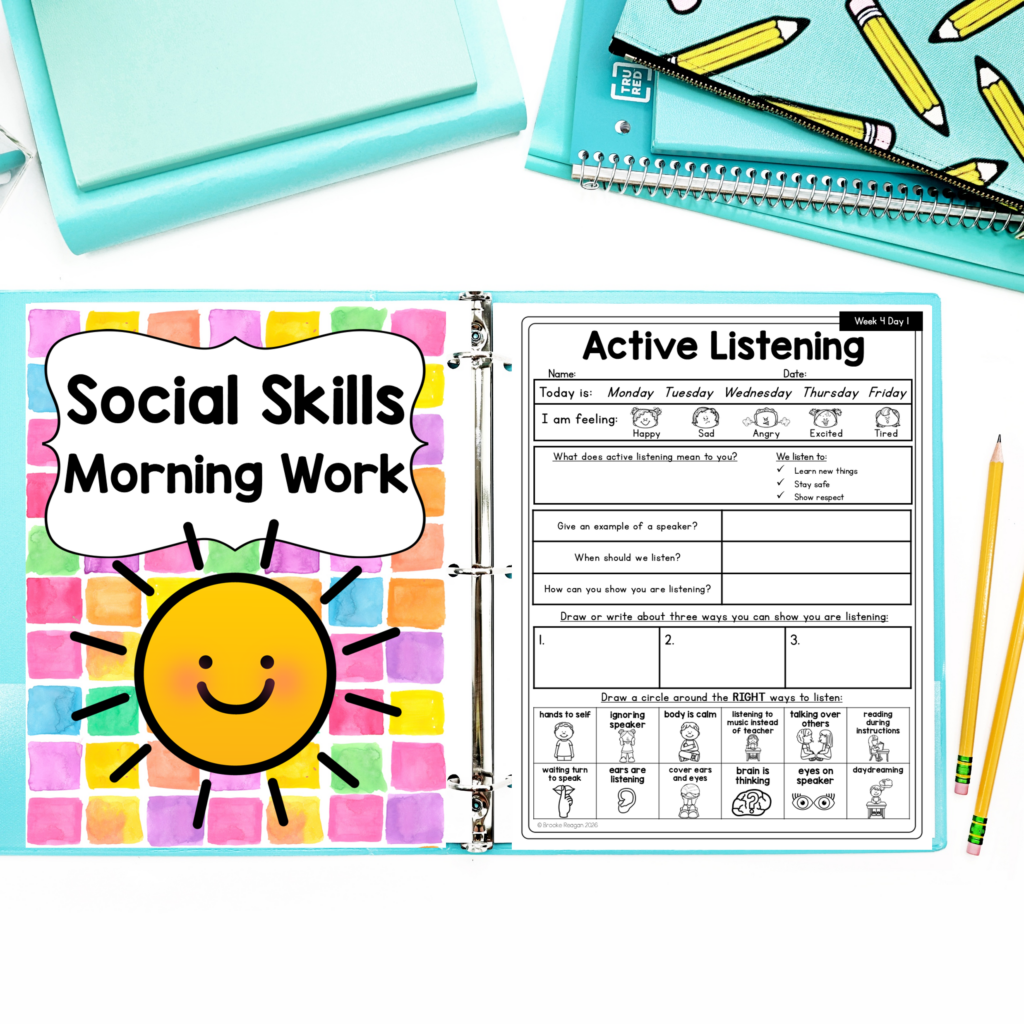
Social skills aren’t just something we teach during a counseling lesson or when a problem arises—they’re life skills that students need every single day. Whether you’re teaching in a general education classroom, special education setting, or behavior program, intentionally embedding social-emotional learning into your daily routine can make a noticeable difference in your classroom culture. One of the easiest ways to create lasting growth is by making social skills a consistent part of each school day through Daily Social Skills Morning Work paired with a Social Skill of the Week.
Why Daily Practice Matters
Just like reading and math, social skills improve with consistent practice. Many students—especially those with autism, ADHD, emotional disabilities, or executive functioning challenges—need direct instruction, repetition, and opportunities to apply what they’ve learned.
Spending just 5–10 minutes each morning focusing on a targeted social skill helps students build confidence while creating a positive start to the day.
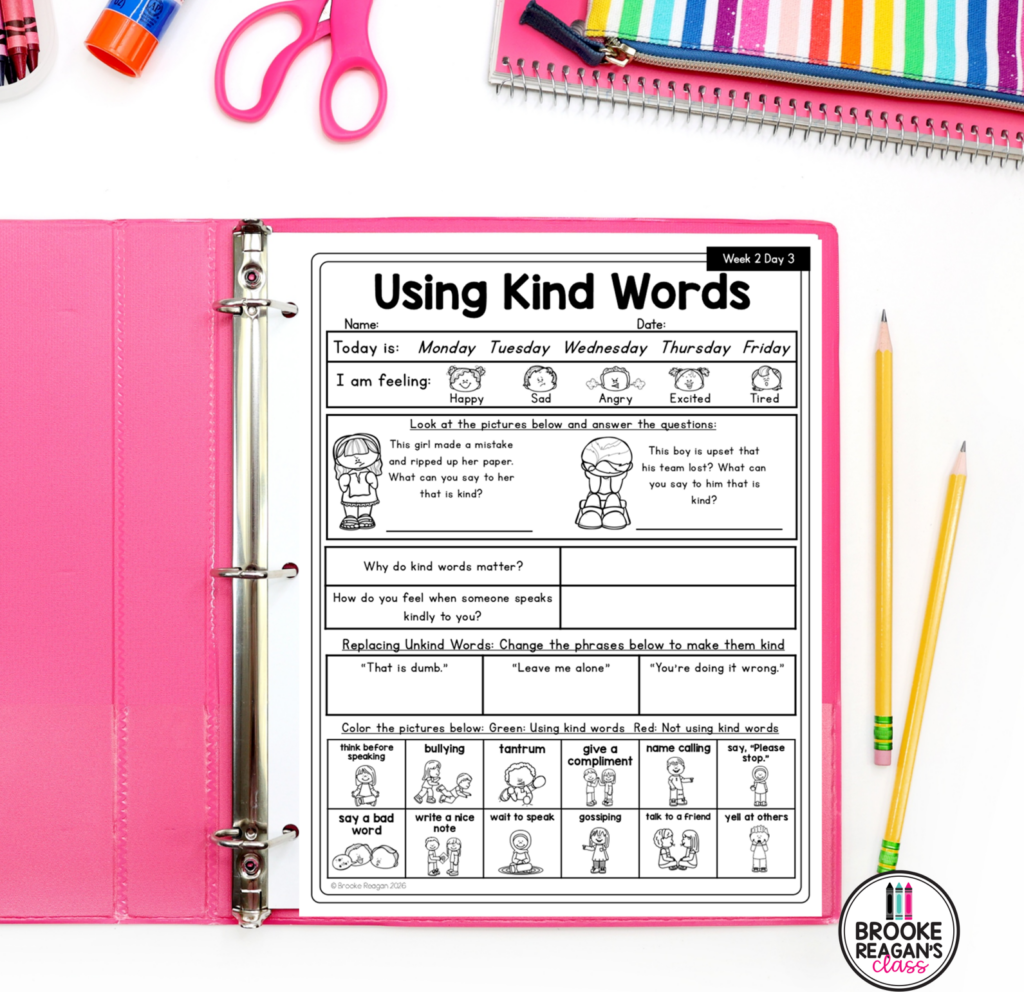
What Is Daily Social Skills Morning Work?
Daily Social Skills Morning Work provides students with a structured activity that encourages them to think about real-life situations before the school day begins.
Students may practice:
These short activities encourage meaningful discussions while helping students develop the social tools they’ll use throughout the day.
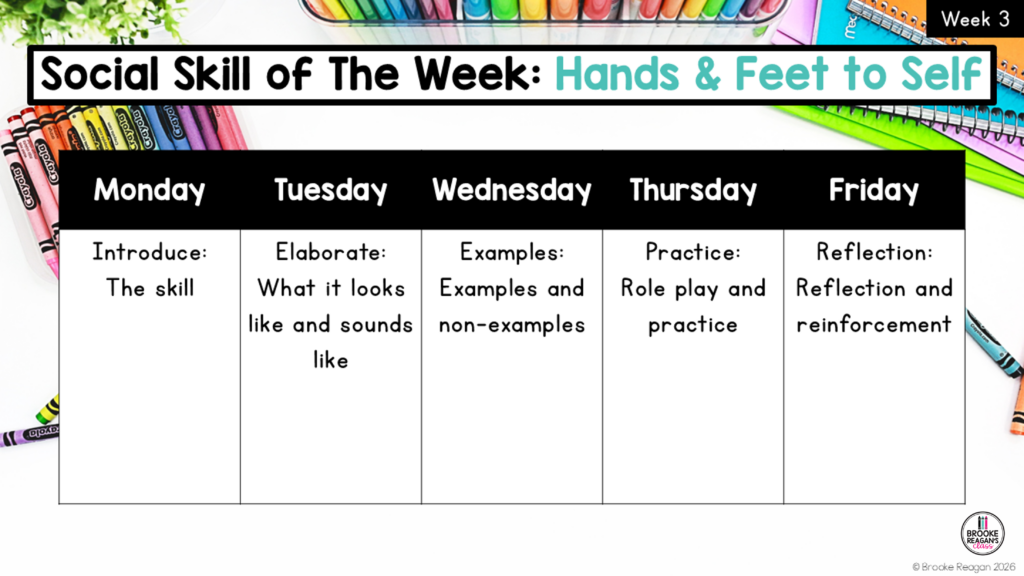
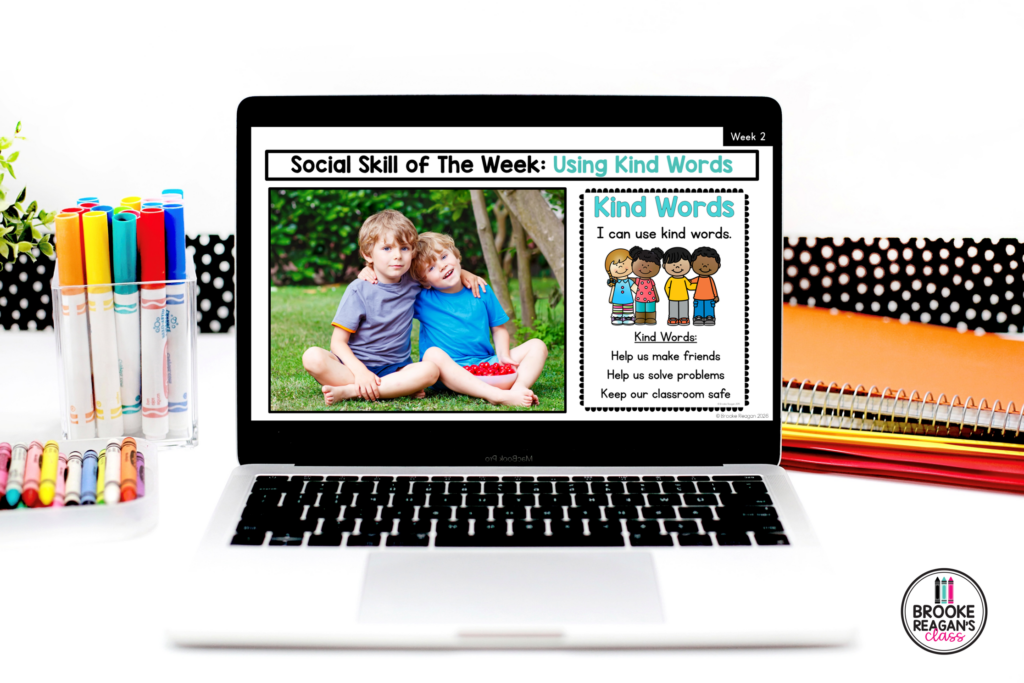
Pair It with a Social Skill of the Week
Focusing on one social skill each week allows students to move beyond simply learning a concept—they have time to practice it in authentic situations.
Below, is my weekly outline for Social Skill of the Week.
Monday: Introduce the week’s skill and discuss why it’s important.
Tuesday: Read a scenario and identify appropriate responses for what it looks like and sounds like.
Wednesday: Share examples and non-examples, using dialogue and questioning
Thursday: Practice role playing through classroom specific and real world examples
Friday: Celebrate growth, reflection, and set a goal for next week.
This simple routine reinforces learning without taking away valuable instructional time.
Benefits You’ll Notice
When social skills become part of your daily routine, you will see:
Perfect for Every Classroom
Daily social skills practice benefits all students, but it’s especially valuable for:
Because the activities are predictable and easy to implement, they fit seamlessly into even the busiest classroom schedule.
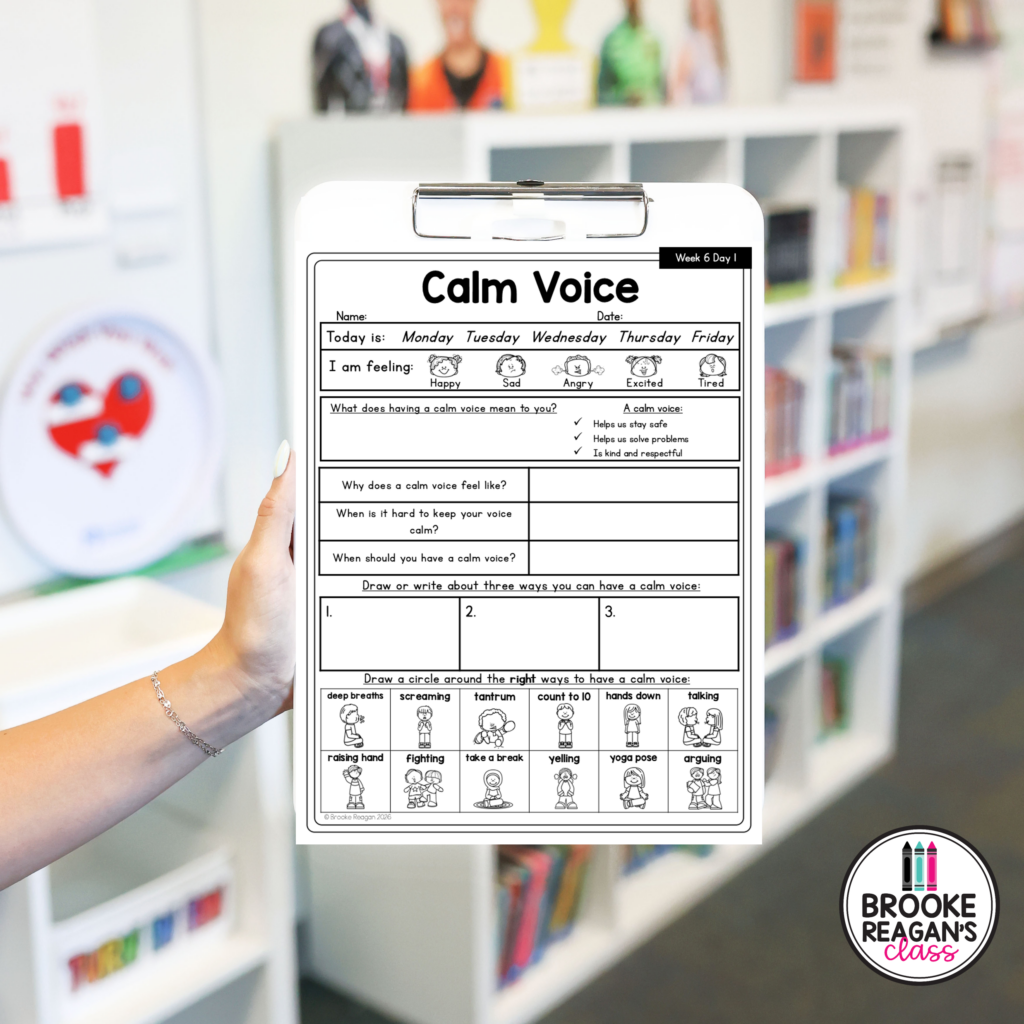
Teaching social skills doesn’t have to be overwhelming. By dedicating just a few minutes each morning and reinforcing one Social Skill of the Week, you’re giving students opportunities to practice communication, empathy, self-control, and problem-solving every single day.
The goal isn’t perfection—it’s progress. Those small daily conversations add up, helping students become more confident learners, better classmates, and successful individuals both inside and outside the classroom. When social skills become part of your classroom routine instead of an afterthought, everyone benefits
Start using social skills as part of your classroom morning routine or meeting meeting time TODAY!