
In the world of behavior support, especially in special education, communication is EVERYTHING. This is true on all levels with students, teachers, and support staff.
When a student is in a crisis or meltdown communication is vital among staff and teachers. When tension is high due to the nature of the situation, it can be challanging to verbalize support that is needed. Sometimes, verbal communication during a behavior can escalate the situation further. That is when visuals are helpful to non-verbally communicate needs.
This is where Behavior Crisis Door Visuals come in!

What Are Behavior Crisis Door Visuals?
Behavior crisis door visuals are simple, clear signs placed on the classroom door (or entry points) that communicate the level of support needed during a behavior incident. These visuals also provide communicate if breaks are needed, additional assistance required, no talking, and more.
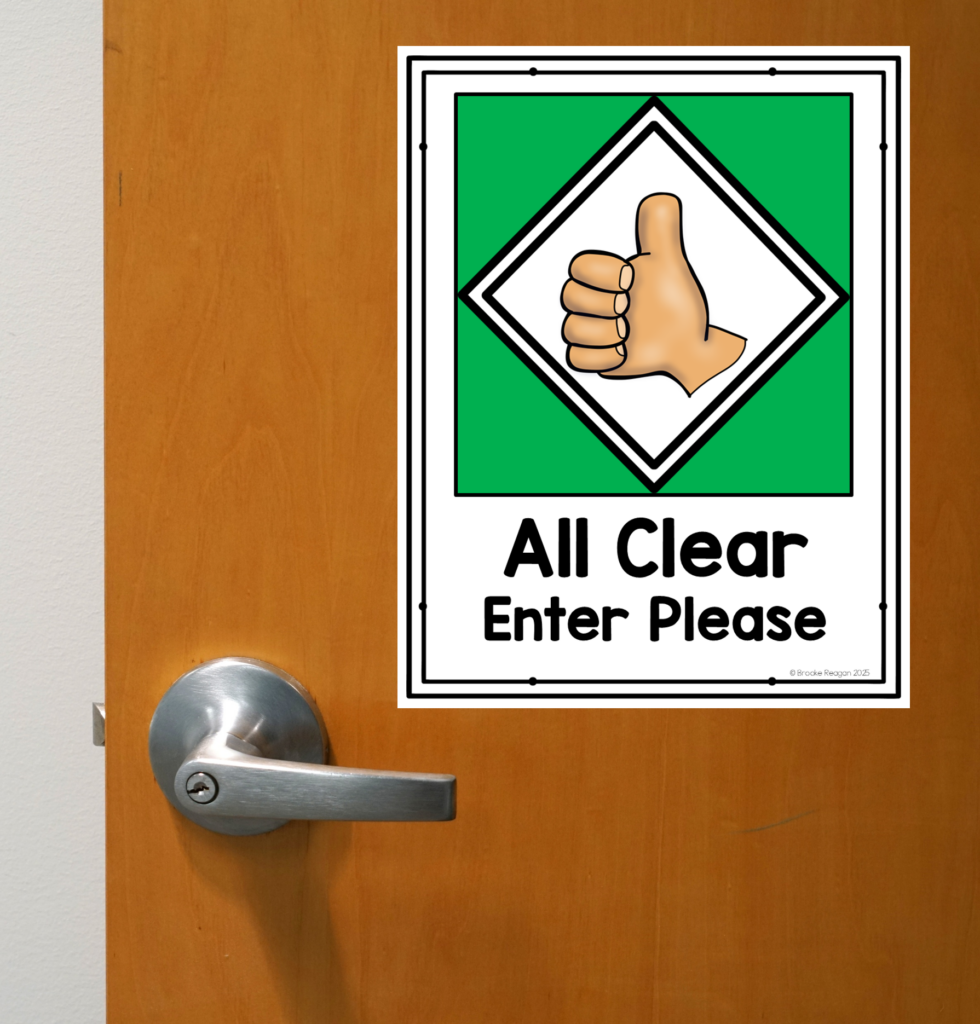
Instead of verbally announcing what’s happening, trying to explain that the room needs to stay quiet, or staff should not enter, the visuals do it for you… instantly, discreetly, and consistently.
Why Door Visuals Work:
How to Introduce the System:
Bonus Tip: With the editable feature in the product, if you building uses walkies, radios, or text groups, pair the visual with a short script…. “Red light is up, support in hallway D.”
Grab the freebie to start using today! The FULL PRODUCT is HERE that features editable visuals and over 20 door signs to choose from… PLUS De-escalation strategies and procedures.