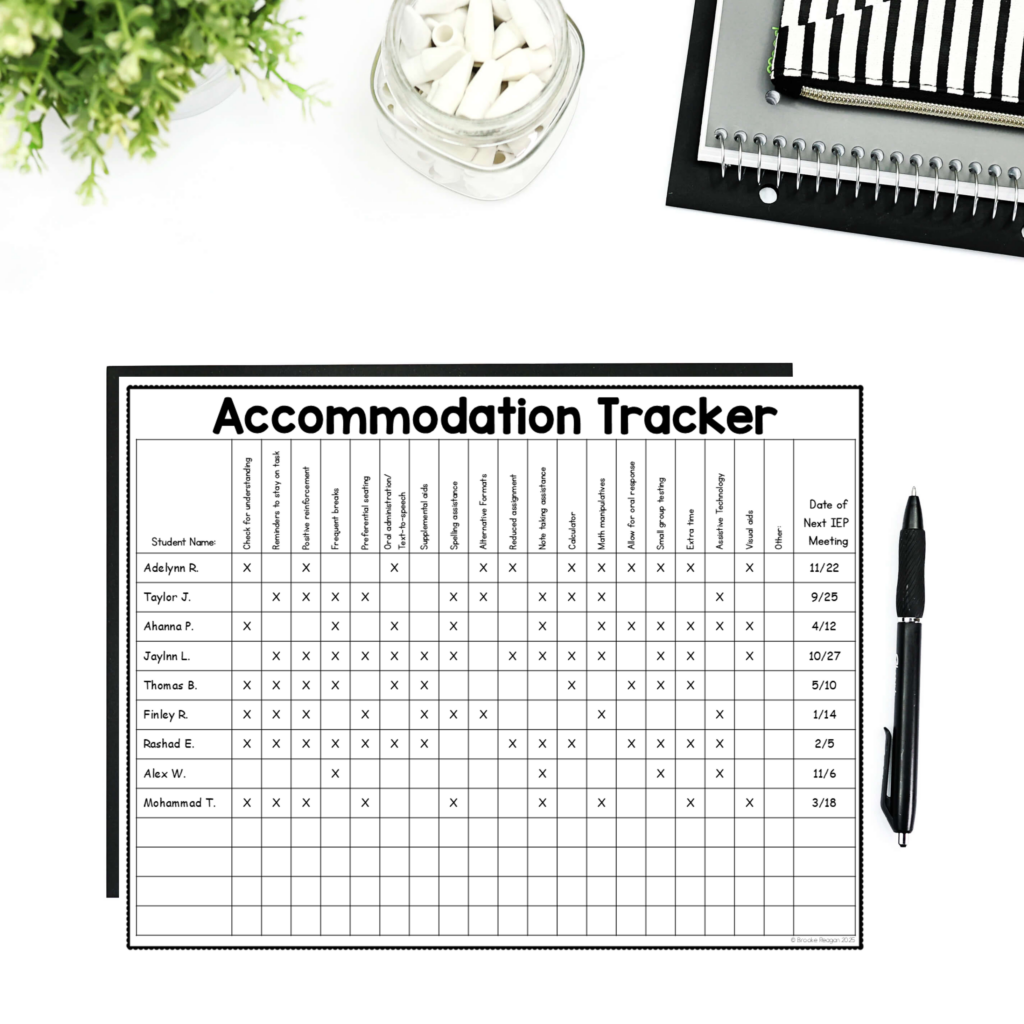
As educators, we all share a common goal: helping students thrive. For students with disabilities or unique learning needs, success in the classroom often depends on receiving accommodations outlined in their IEPs (Individualized Education Programs) or 504 Plans. While most teachers know these accommodations are legally required, what sometimes gets overlooked is the importance of tracking their use. Tracking is more than just a checklist—it’s a powerful tool for accountability, reflection, and growth.
Why Tracking Really Does Matter
1. Legal Responsibility
Accommodations are not optional—they are a student’s right under federal law. Tracking ensures that each accommodation is consistently provided. Detailed records aka tracking, provide evidence that the school has upheld its responsibilities.
2. Student Success and Equity
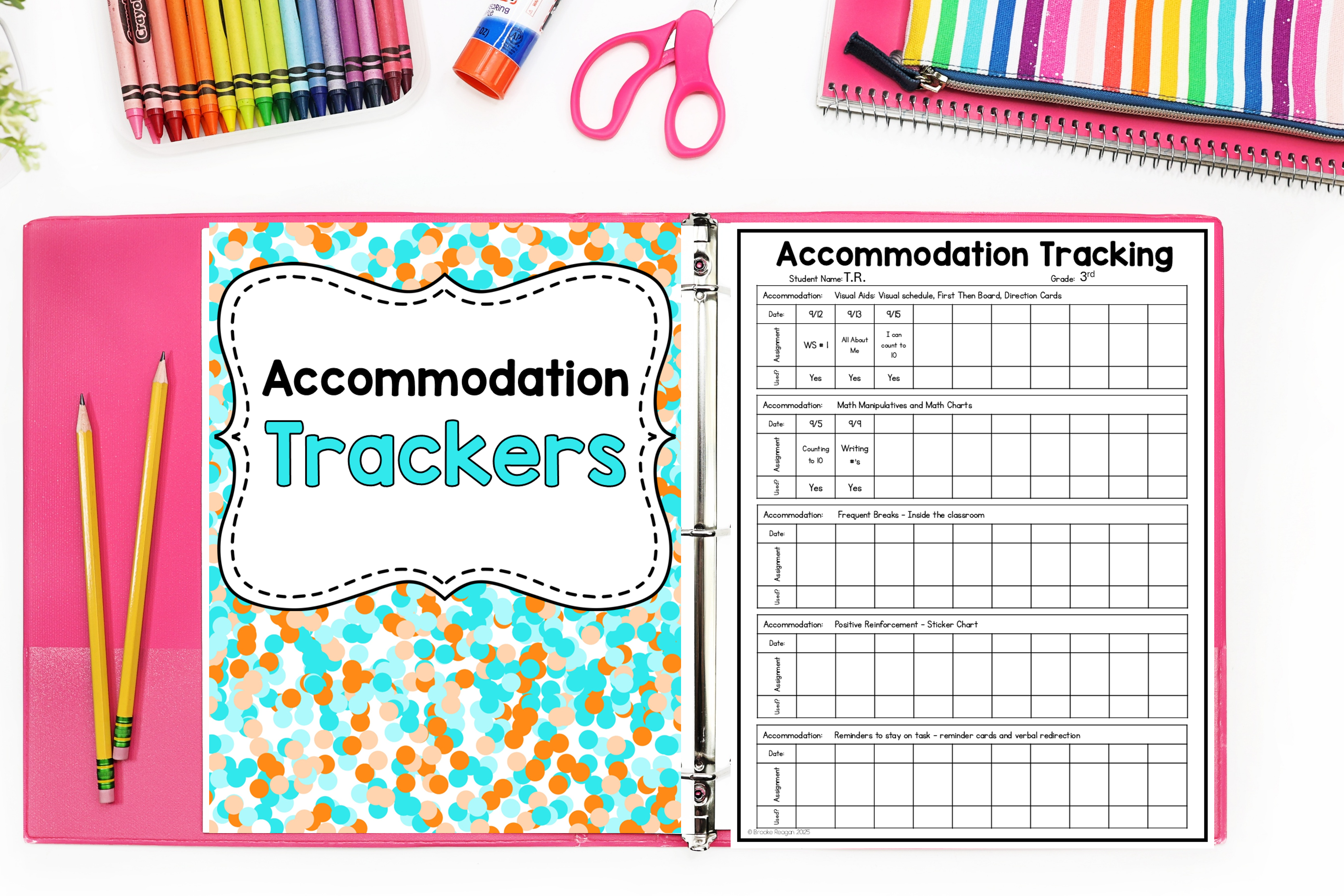
Tracking helps us see whether accommodations are being implemented with fidelity. Keeping clear records ensures every student gets the support they deserve, every time.
3. Data for Reflection and Adjustment
When we track accommodations, we create a record of what works and what doesn’t. This data can be invaluable during IEP meetings or parent conferences. For example:
4. Improved Communication
Teachers, administrators, and support staff often share responsibility for implementing accommodations. A clear tracking system ensures everyone is on the same page. It also helps when a student transitions to a new grade level or teacher.
5. Building Trust with Families
Parents want to know that their child’s needs are being met consistently. Sharing records of accommodations shows transparency and builds confidence in the partnership between home and school.
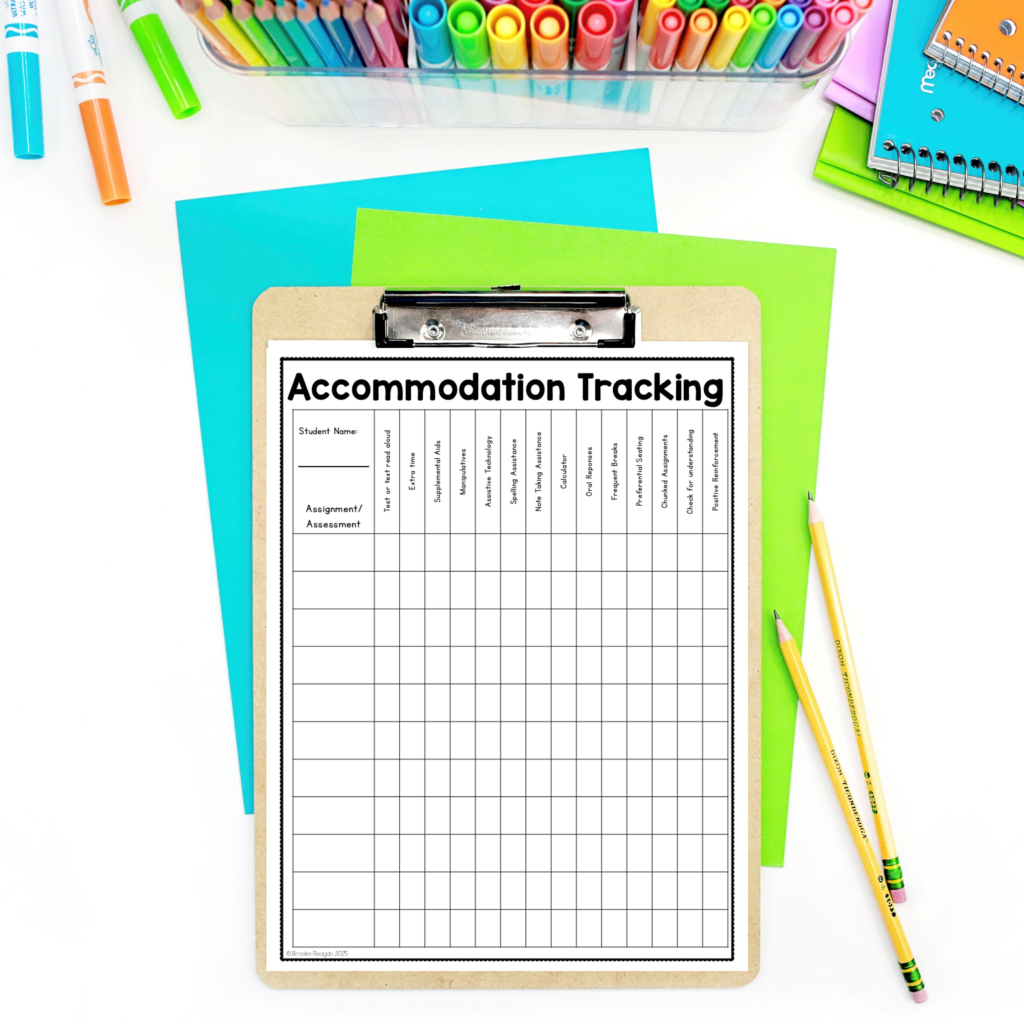
Tips To Make Tracking Easy:
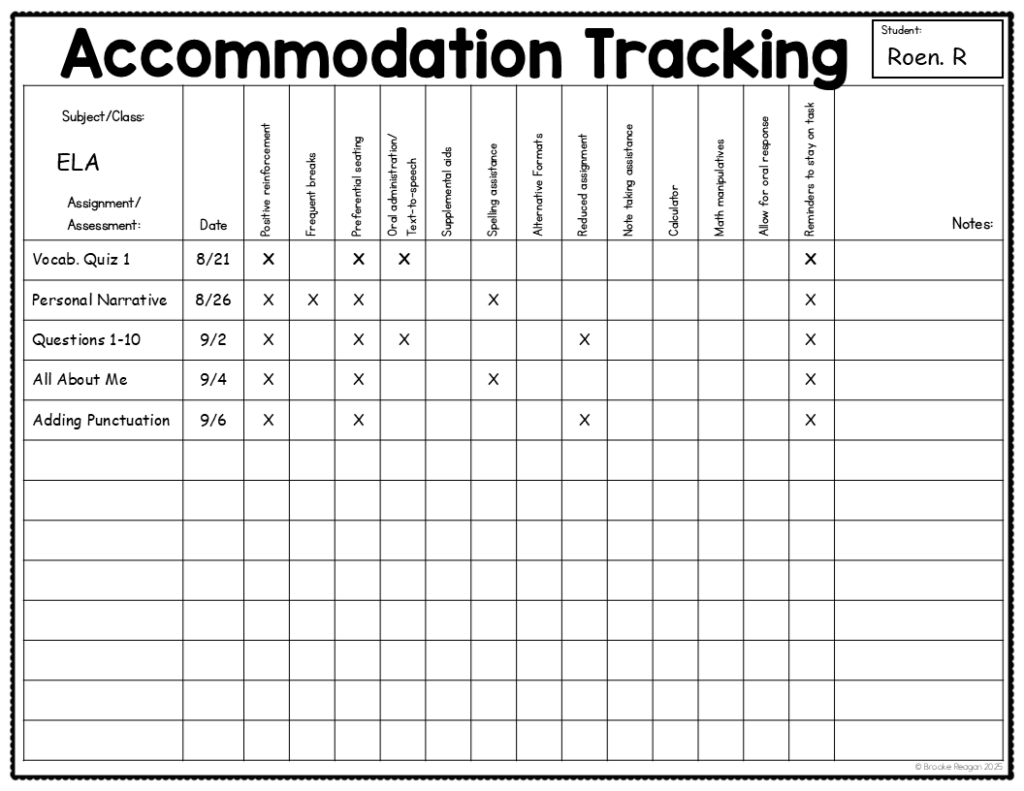
Tracking student accommodations might feel like “one more thing” on an already full teacher plate—but it is one of the most impactful things we can do to support our students. Not only does it protect us legally, but it also helps ensure that every child has equitable access to learning, that we’re making data-driven decisions, and that families trust the work happening inside our classrooms.
When we track accommodations, we’re not just checking a box. We’re showing students that their needs matter—and that we are committed to helping them succeed.